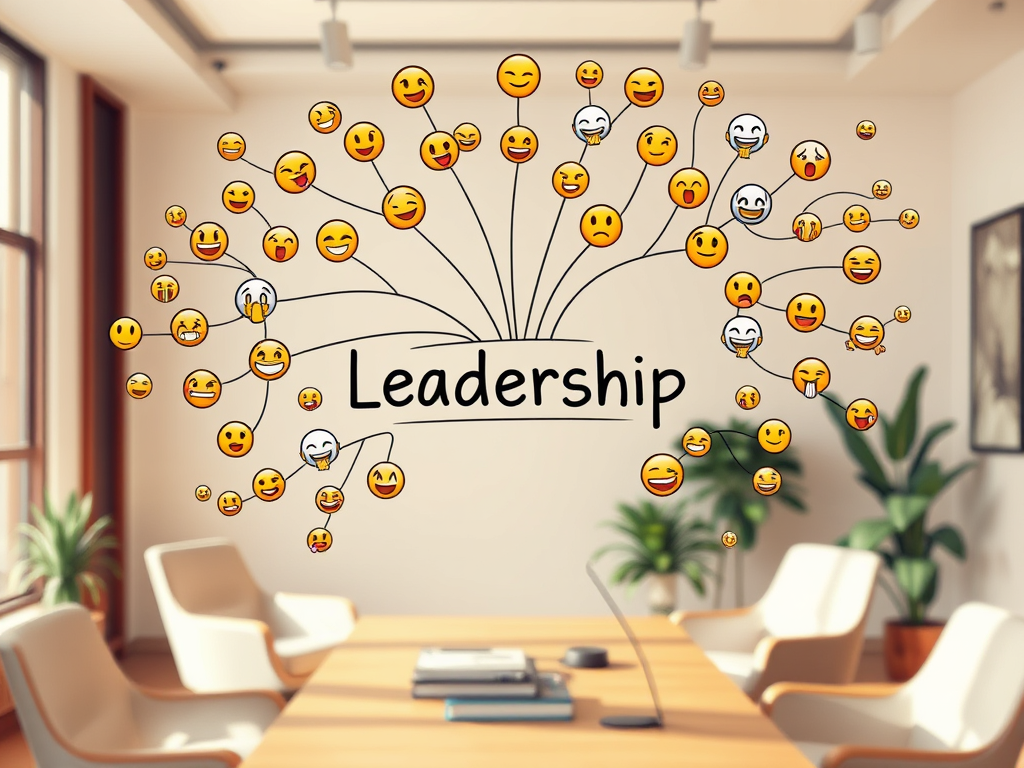
If the fundamental distinction between emotions and feelings lies first in immediacy and then in conscious interpretation, what form of leadership should be prioritized: emotional or sentimental? In other words, is it preferable for a leader to attune primarily to the emotions or to the feelings — both their own and those of their team?
And what if there isn’t even a distinct difference between the two and an emotion takes the shape of sentiment?
Emotions are immediate, often automatic physiological and psychological responses to external or internal stimuli. They arise without the intervention of conscious thought and serve a primal, evolutionary function: they signal threats, opportunities, social cues. On the other hand, feelings are the subjective interpretations we consciously assign to these impulsive and uncontrollable emotional experiences once they have been processed, passed through our mental and intellectual filter. They are layered with memory, context, culture, individual meaning. While emotions are brief and often volatile, feelings tend to endure, thus shaping longer-term perceptions and behaviors.
In the context of leadership, an emotionally attuned leader is one who can sense and respond to the shifting affective states of a team in real time. Such a leader perceives rising tension in a meeting, the spark of enthusiasm in a brainstorming session, or the subtle fatigue after prolonged exertion. They are capable of immediate relational adjustments — modulating tone, pacing, decision-making aligned with the emotional climate. Emotional leadership emphasizes agility, presence, and relational intelligence.
Conversely, a sentimentally aware leader operates at a different depth. They do not merely perceive emotional currents but manage to interpret them within a broader temporal and relational context. A sentimentally aware leader recognizes that recurring frustration may not be rooted in a particular task, but in a more profound sense of misalignment. They understand that transient excitement, while useful, does not necessarily equate to sustainable engagement or motivation. Sentimental leadership involves reflection, patience, and a capacity to discern the narratives that feelings reveal over time.
Are such leaders just good psychologists? Should they be, to make skilled leaders? I believe they are mostly excellent at reading people, yes. But this doesn’t come as much from utterly psychological abilities as it does from their empathy, human life experience, and capacity to feel and interpret emotions. If one knows what anger or frustration looks and feels like, then one knows to see and read it in other people. If one is experienced on how to deal with emotions and let them grow (or not) into sentiment, then one can also make sure this happens (or not) within their team.
The question, therefore, is not which type of leadership is superior, but how leaders can effectively integrate both dimensions. Exclusive reliance on emotional immediacy risks reactive leadership — one that is perpetually adjusting without necessarily addressing underlying causes. Conversely, an overemphasis on the interpretation of feelings may lead to analysis paralysis or a disconnection from the lived, dynamic reality of the team’s daily experience.
True leadership, particularly in complex and rapidly evolving environments, demands a fluid movement between emotional responsiveness and sentimental reflection. It requires the capacity to be fully present to the immediate emotional landscape while simultaneously holding a reflective space to interpret the deeper significance of those emotions over time.
Leaders who cultivate this dual awareness are better positioned to foster environments of psychological safety, authentic engagement, and sustained organizational performance. By harmonizing immediacy with interpretation, emotion with sentiment, leaders show they lead by wisdom: both human and strategic.




 Nefelibata
Leave a comment