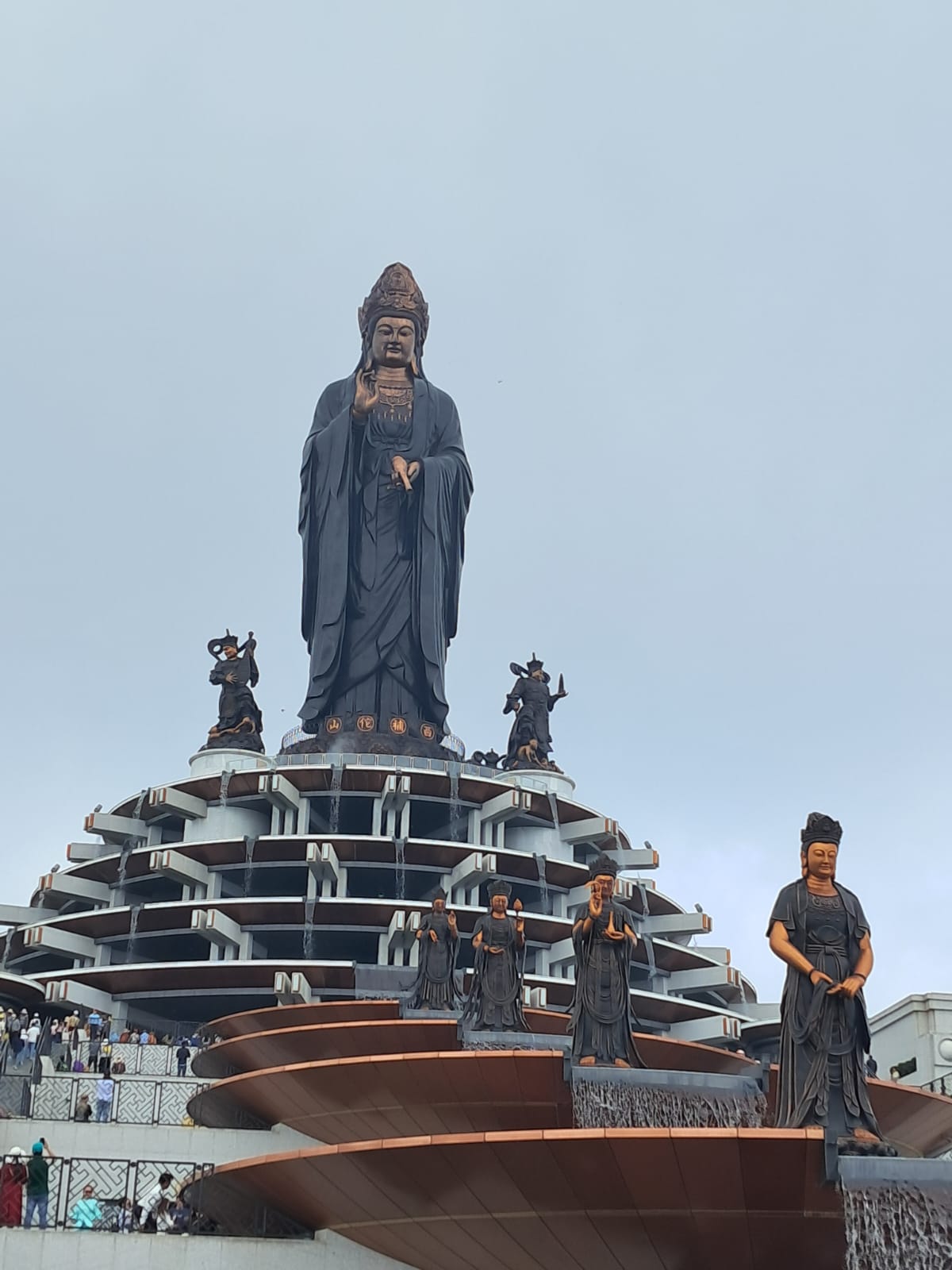
There is one complete paradox that never ceases to surprise me in Vietnam. On the one hand, there is the way of living: very little needed, small houses, few belongings, simple and unpretentious food. On the other hand, there is the space, the majesty, the opulence and the dedication, the luxury, even, when it comes to temples and pagodas, to monuments, buildings, or any sightseeing objective.
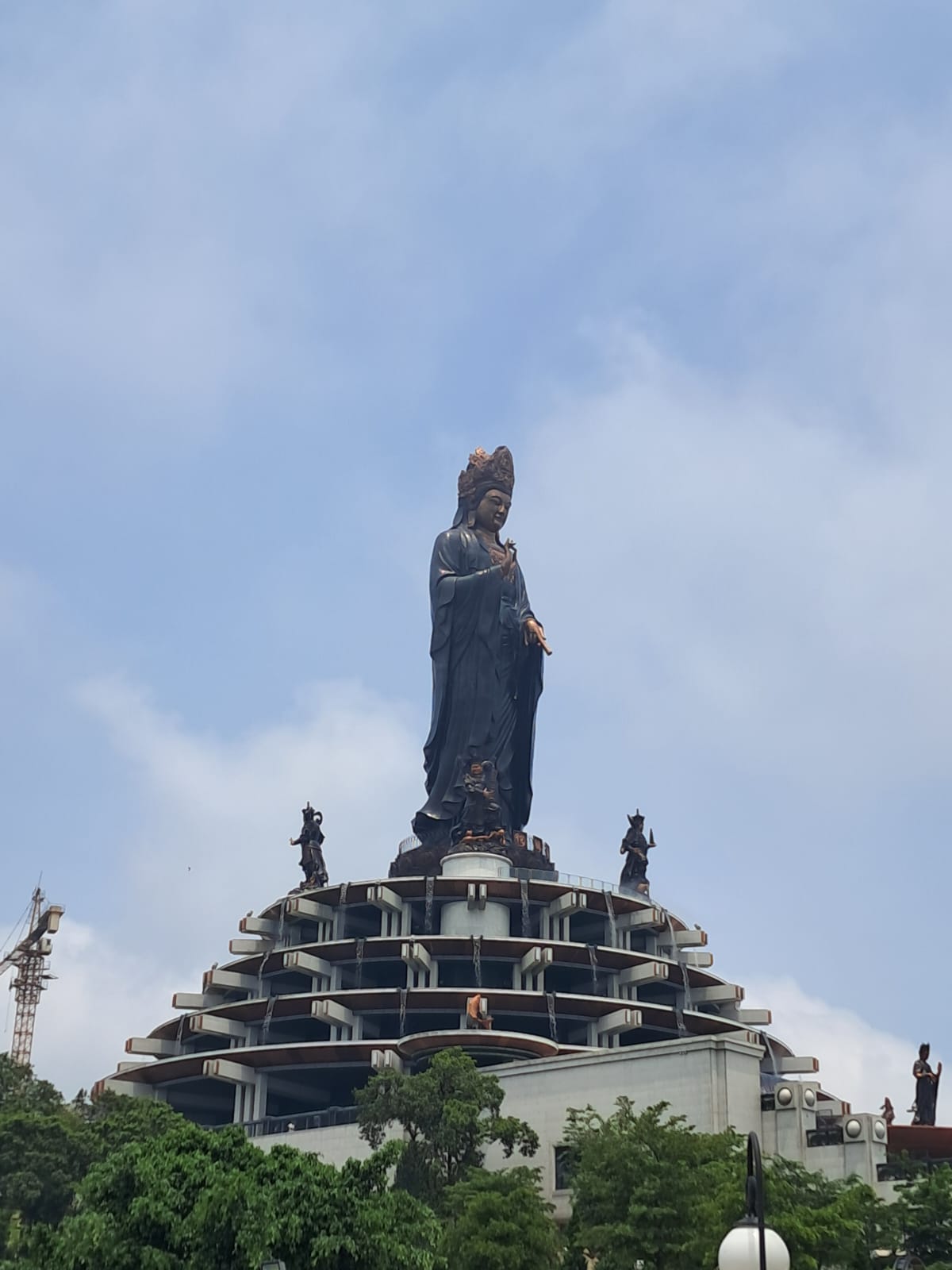
On a brisk April morning, I found myself setting out to discover the majestic peak of Bà Đen Mountain nestled in the Tay Ninh Province, towering at 986 meters above sea level. Though the mountain is well-known for its awe-inspiring views and spiritual significance, I must say I had not really acquiesced the grandeur of this pilgrimage site until I had finished climbing the stairs and raised my eyes to the statue of the Black Lady that protects the mountain
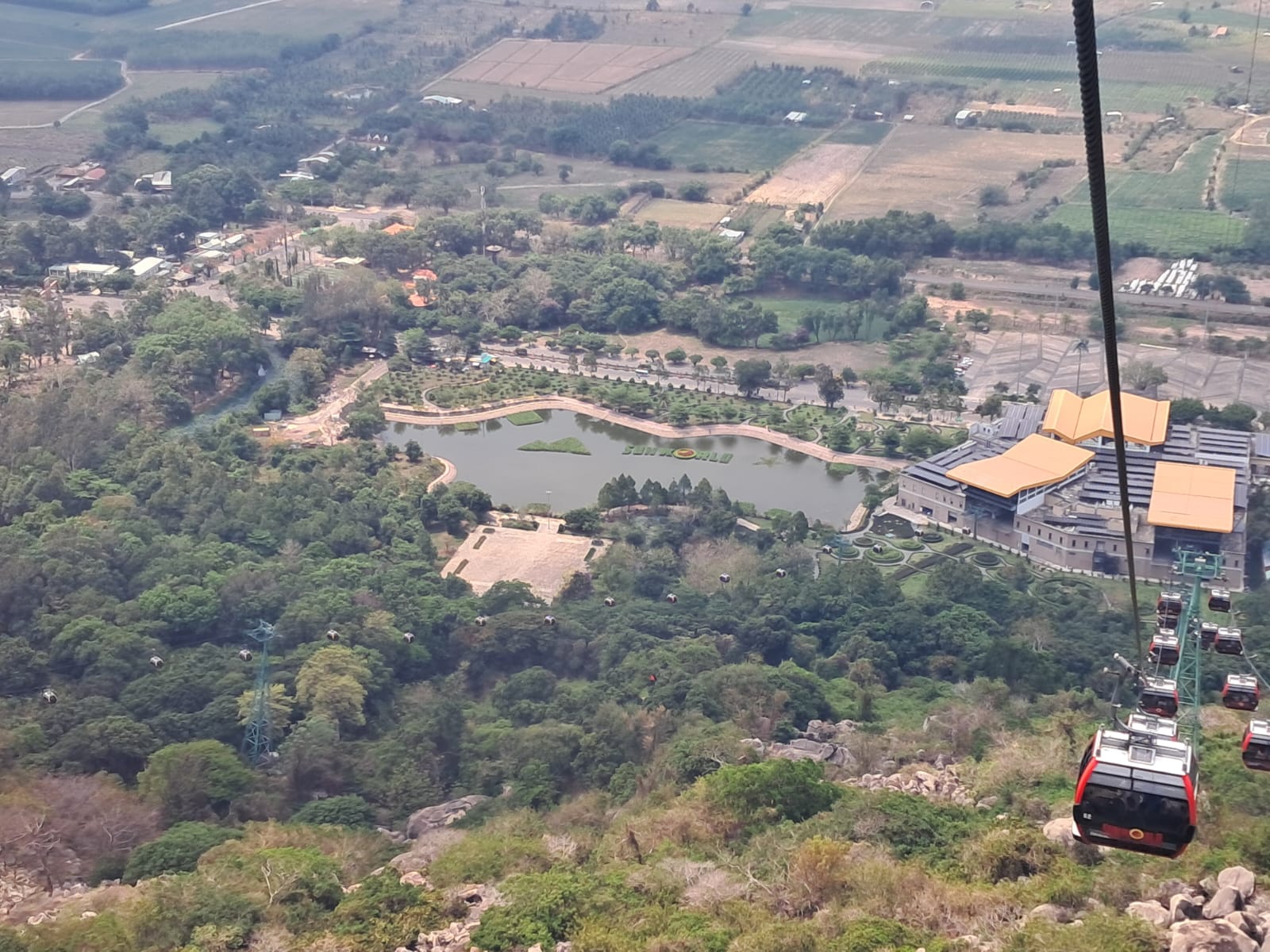
On the way to the top, there was a bustling tapestry of travelers, tourists, and pilgrims, all eager to capture a piece of the mountain’s magic. Bà Đen’s cable car, one of the longest of its kind in Asia, carries passengers over 3,200 meters of forested land, offering sweeping views of the surrounding terrain below. Swiftly ascending through a blanket of lush greenery, I reached the summit, having the distinct feeling of the serenity enveloping the place.
The mountain harbors a deep history that dates back centuries, down to some remote point in the past that truly stems from mythical realms. What are called variations of the legend of Núi Bà Đen are probably bits and scraps of what really happened. The myth speaks of a young lady, Bà Đen, who had fallen in love with a soldier and chose death on the mountain, faced with living in betrayal and a sort of moral hazards. The spirituality of the place draws its living strength from the mere idea of sacrifice in the name of love and defense of what is right and pure.
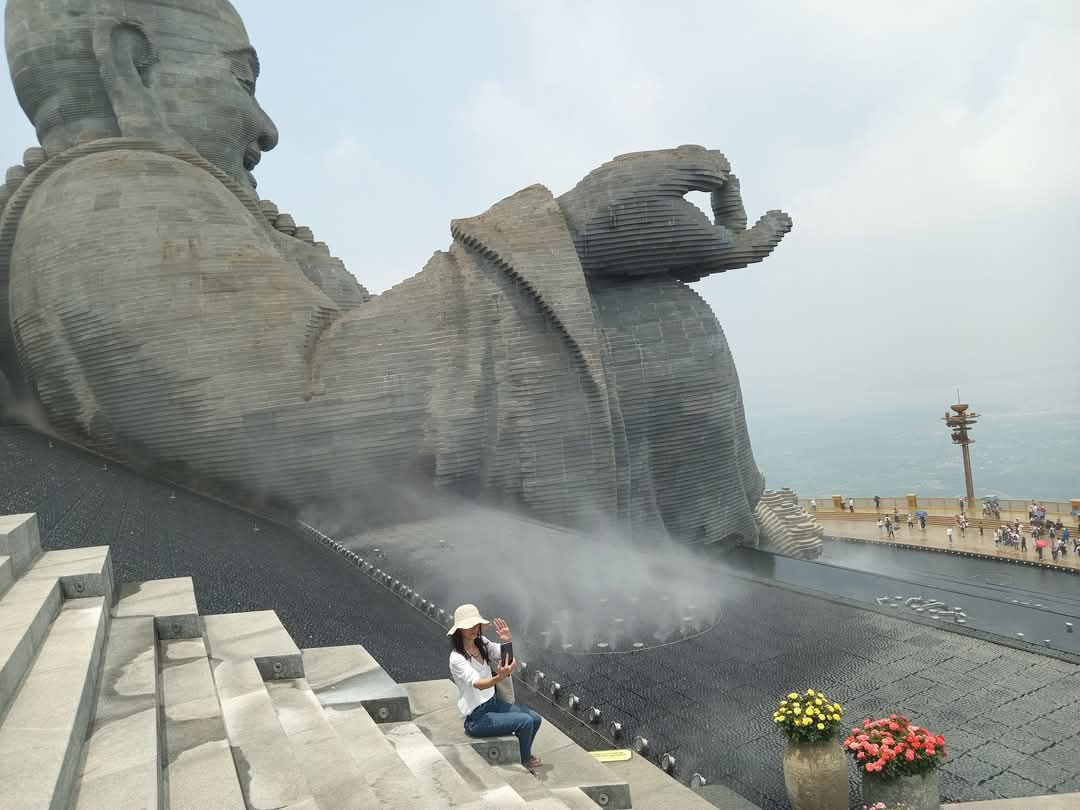
The Black Lady Pagoda was originally built in the 18th century, serving as a sacred site for local worshipers, and has been a pilgrimage site ever since. The wide, open spaces allowed for panoramic views that stretched to the horizon. It is otherwordly to spot the towering Black Lady statue—standing at 11 meters—casting her gaze over the land, surrounded by her faithful defenders, also immortalized as statues.
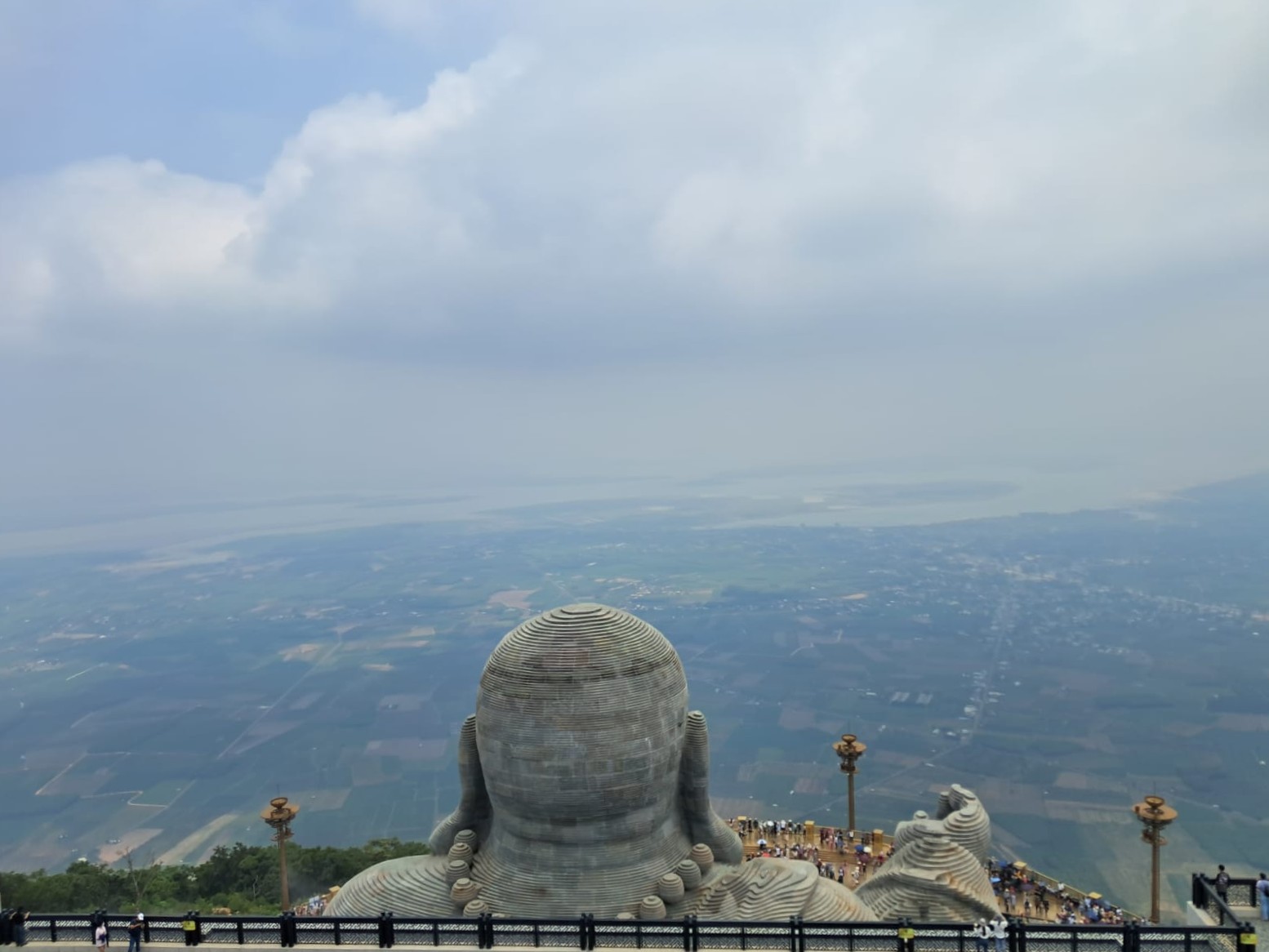
The smiling Buddha, another immense statue perched higher on the mountain, had an effect I hear is common when close to mammoth constructions, par to pyramids only: you get the feeling that time slows, and that their calming presence actually reminds you of the strength and beauty found in stillness.
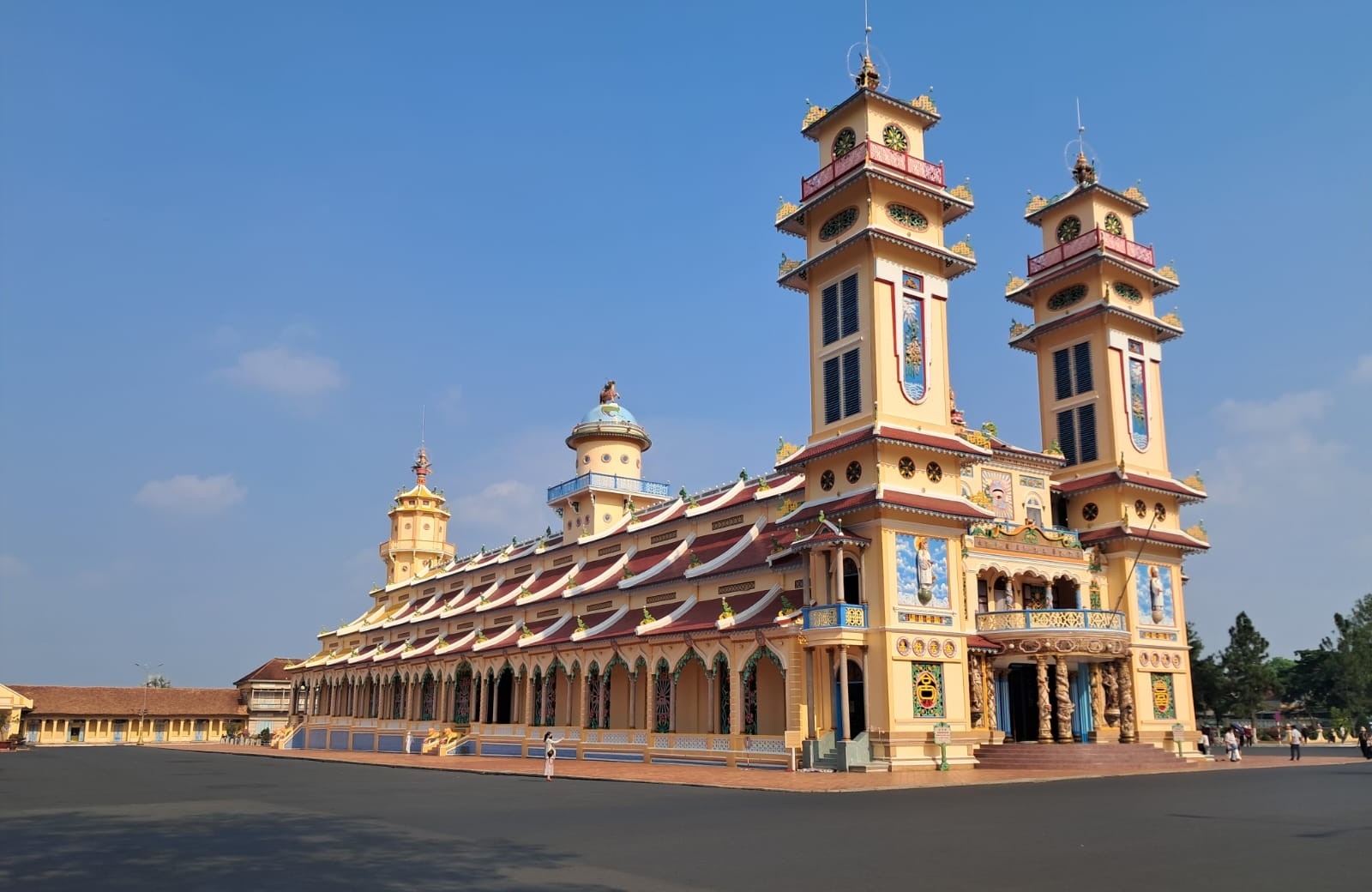
The mountain also has special religious significance to the Cao Đài syncretic religion that amasses elements of folk ancestor worship, Confucianism, Taoism, Buddhism, and Roman Catholicism. Whereas Cao Đài literally means High Tower, the full name of the religion refers to great faith and universal redemption. Tay Ninh Holy See, its main temple, is a striking architectural creation and a major religious tourist attraction.
A very long time ago, something extraordinary had to have come to be here, so close to Ho Chi Minh City, for the modern traveler to have the opportunity to visit such mysteriously spiritual spots in the 21st century. That is doubtless. But what happened here, exactly? Where did all the peace and quiet, the serenity, the silence, the devotion, and the deference come from? What are all these the remaining vestiges of?
We can only speculate. We are left with real, tangible information of a place that to me, it was like a precious gem hiding in plain sight.
Bà Đen Mountain is the highest peak in Southern Vietnam, standing at 986 meters (3,235 feet). The cable car, opened in 2018, is one of the longest in Asia, stretching 3,200 meters (2 miles). The whole mountain is part of the Bà Đen National Park, which covers 24,000 hectares of protected area, including diverse wildlife and flora.




 Nefelibata
Leave a comment